

Temperature matters when you travel. It decides how you pack, what you wear, and even how you plan your daily activities. But not all countries use the same unit to measure it. A European traveler who is going to the United States or the other way round can be easily confused with such numbers as 36.8°C as 98.2°F. What do they actually mean? Misinterpretation of a temperature reading will leave you unprepared to the weather or even panic when you see a number that does not appear right.
Understanding the Conversion: 36.8°C to °F
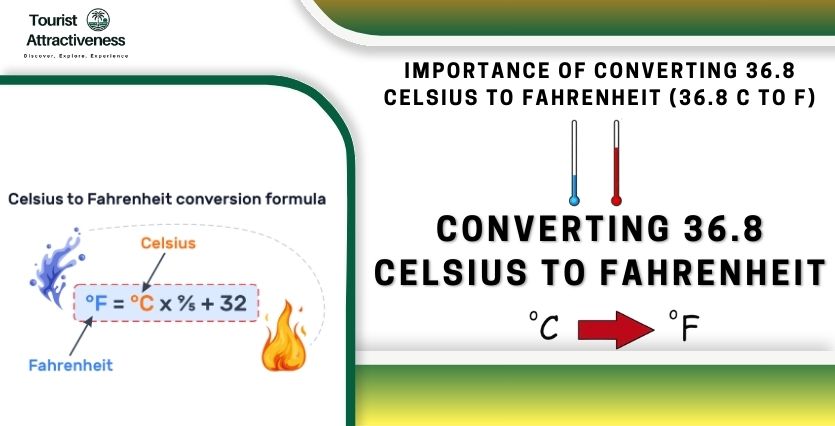
For those unfamiliar with the formula, here’s how you convert Celsius to Fahrenheit:
Formula:
F = (C*9/5) + 32
Applying this formula:
36.8°C * 9/5 = 66.24
66.24 + 32 = 98.24°F
So, 36.8°C is equal to 98.2°F
Temperature Comparison Table
| Celsius (°C) | Fahrenheit (°F) | Weather Condition |
| 0 | 32 | Freezing point |
| 10 | 50 | Cool weather |
| 20 | 68 | Mildly warm |
| 30 | 86 | Hot weather |
| 36.8 | 98.2 | Normal body temperature |
| 40 | 104 | Very hot |
Why 36.8 Celsius to Fahrenheit Conversion is Crucial for Travelers?
1. Packing Smartly
Consider coming to a city where people would have a nice climate only to be caught in a heatwave. Without knowing what the conversion is, you may end up with a jacket in need of light garments or the other way round. The temperature in the right unit will assist you in packing accordingly.
2. Health & Body Temperature Awareness
For medical reasons, understanding 36.8°C as 98.2°F is essential. Most people consider 98.2°F as a normal human body temperature. But if you are used to Celsius, the reading of a fever in Fahrenheit may be frightening when you are not aware of the conversion.
3. Local Weather Reports Can Mislead
Different regions use different scales for temperature. A European traveler visiting the US may hear a forecast of 98°F and assume it’s freezing when it’s actually extremely hot! Weather applications and news may not be as useful as they need to be without conversion knowledge.
Celsius vs. Fahrenheit: Where They Are Used?
| Country/Region | Uses Celsius (°C) | Uses Fahrenheit (°F) |
| United States | No | Yes |
| Canada | Yes | Yes (partially) |
| United Kingdom | Yes | No |
| Australia | Yes | No |
| India | Yes | No |
If you’re from a Celsius-using country and traveling to the US, you should get used to Fahrenheit to avoid misinterpretation.
How to Quickly Convert C to F Without a Calculator?
For a rough idea, use these easy tricks:
- Double the Celsius number and add 30. (It’s not perfect but close enough for daily use.)
- Example: 36.8°C → (36.8 x 2) + 30 ≈ 98°F
- Memorize key points:
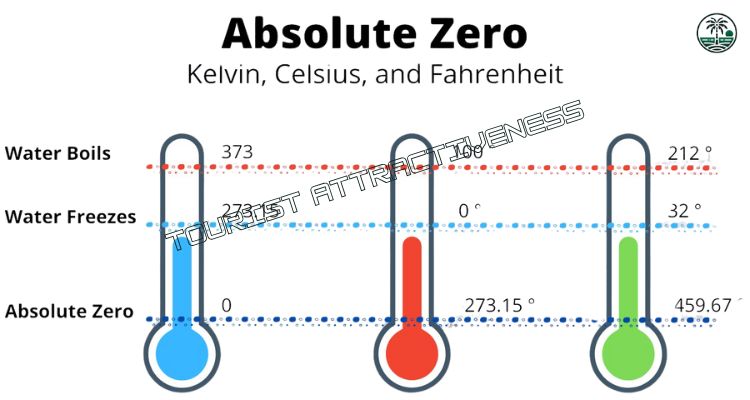
- 0°C = 32°F (Freezing)
- 20°C = 68°F (Mild)
- 37°C = 98.6°F (Body Temperature)
- 40°C = 104°F (Hot)
Apps & Tools to Make Life Easier
If you find conversions difficult, many apps can do it instantly for you:
- Google Search: Just type “36.8C to F”
- Weather Apps: Most apps allow switching between Celsius and Fahrenheit
- Offline Calculators: Many travel apps offer unit conversion tools
Real-Life Example: A Traveler’s Story
Anna was a French backpacker who was in Texas in summer. She looked at her phone and found it was 40°C in the forecast. She was used to Celsius, and thought it could be tolerated. As a matter of fact,40°C is 104°F, an excessive heatwave. She wished she had made better preparations because the temperature was a lot worse than she thought.
Common Misconceptions About Celsius & Fahrenheit
- “Fahrenheit is less accurate.” Not true. Fahrenheit gives finer temperature variations, making it useful for everyday weather reporting.
- “Celsius is more scientific.” While true for scientific purposes, Fahrenheit is still widely used for daily weather in some countries.
- “Conversion is always exact.” No, rounding differences often occur, which is why estimates work fine for travelers.
Knowing 36.8c to f Conversion for Smart Travel
Traveling is about new experiences, not about being caught off guard by simple things like temperature. Whether you are checking weather forecasts, dealing with fevers, or simply planning what to wear, knowing how to convert Celsius to Fahrenheit is a small but vital skill. The next time you see 36.8°C on a thermometer, you will know exactly what it means. A little awareness can make all the difference between comfort and frustration while traveling!